Joan Carter (born 1920) and Ivy Reeds (born 1924) took part in the Walkern Memories: 935 Years project and exhibition, having their memories of Walkern recorded by Janet Woodall and their photo taken by local photographer Rod Shone, on 4 July 2007. This transcription first appeared in the March 2008 issue of the Walkern Journal.
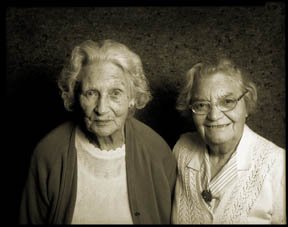
Joan: I was born in Forest Gate in London but came here from South End when my parents took over the Yew Tree. My maiden name was Bish. Harry Bish was my father. They had the Yew Tree for 28 years I think. I married a local boy, a builder, Herbert Carter. They were an old Walkern family
Ivy: My husband, Frank, was a butcher. He was at the butchers in Walkern for 44 years. Neither of us were born in Walkern, I was born in Ware but grew up in Graveley and my husband came from Weston. I was in my early 20s when I arrived in Walkern. I lived in Totts Lane when we first arrived. At the end of the garden was a well, and there were sheds, barns, that had a copper. We didn’t have any mains water in the house. There was a tap outside, near where Mrs Young lived. She would boil up her kettle to thaw out the tap when it froze.
Joan: I was only 14 when I moved here with my parents and my brother, so I lived in the Yew Tree until I got married. I had to work behind the bar, and of course the Yew Tree had a petrol pump outside at the time, and you’d have to go out and serve anyone that wanted to fill their car up. Dad used to go to work – he sold cars. Mum worked in the bar. I think the pub is more or less as it’s always been. In those days they didn’t do much in the way of food at the pubs: they’d put snacks on if they had a dart match or something like that, which they often had. If anybody came in and wanted a snack, Mum would go out back and make it.
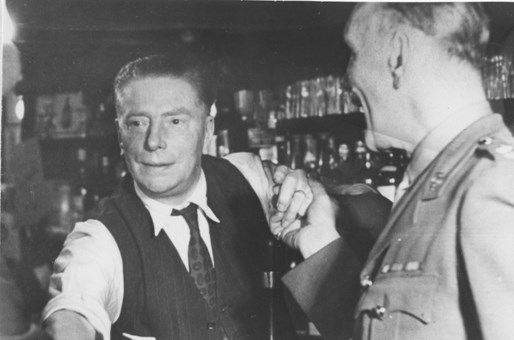
Ivy: Joan’s Dad, whenever there was a wedding in Walkern, he’d stand outside the Yew Tree and ring the bell
Joan: He always made a fuss about weddings
Ivy: We always knew when there was a wedding, we’d hear the bell going and see Mr Bish ringing it for all he was worth…
…You used to have quite a lot of the old ones in the Yew Tree didn’t you? The old Walkernites…
Joan: Granddad Carter used to be there of course, well, he was my husband’s father
Ivy: And Edwards, Trucky Edwards. He was a character in the village.
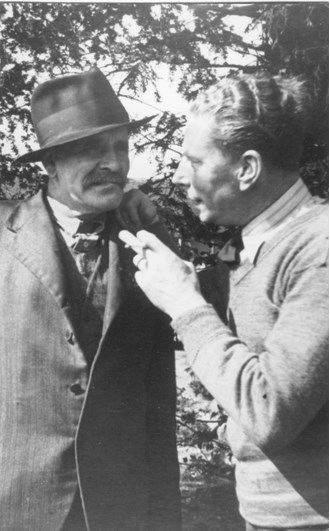
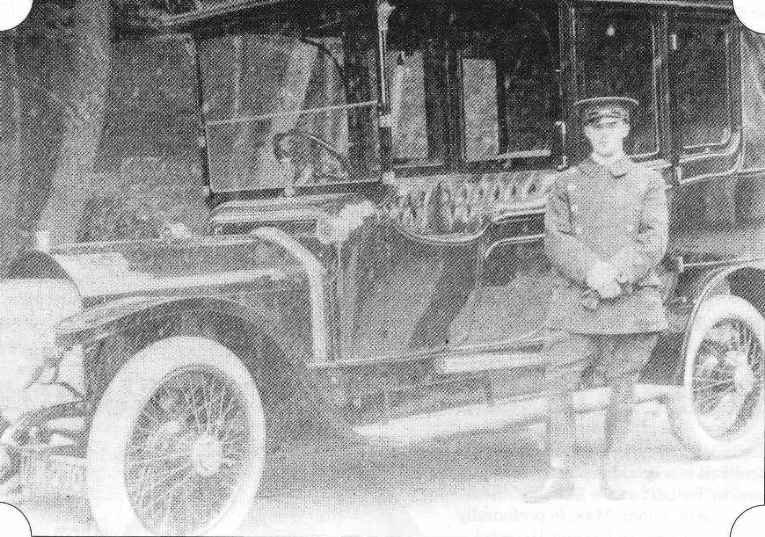
Joan: I can remember Miss Cotton-Browne all right – she knocked me off my bike! Well, it was her chauffeur of course. She said, “oh, it’s only a village girl” and when I went home and told my father, well “I’ll give her ‘it’s only a village girl’!” He was on the phone to her straight away. Miss Cotton Brown or not. She come the next morning and apologised.
Ivy: I don’t remember much of her as she died soon after we came here
Joan: She thought she was a tip top person, well she was to a certain extent…
Ivy: She thought she ran Walkern
Joan: She did run Walkern. Yes, she did, there’s no doubt about it. But my Dad wouldn’t have that. “I’ll give her Miss Cotton Brown” he said.
Ivy: When I was a little girl in Graveley we had a similar woman who lived in the big house, and she used to come down in a pony and trap. I think every village had somebody…
Joan: …with Miss Cotton Brown, most people had to bow down to her, and she expected them to!
Ivy: We had to curtsey when we were little, when she gave out the prizes.
Joan: I wouldn’t bow down to her, or curtsey! Of course some people might lose their jobs or houses if they didn’t. But we weren’t used to that sort of thing.
Ivy: Of course everything was delivered then. You used to get your bread delivered, groceries delivered, and meat was delivered. My husband was on delivery. He used to go all around the villages delivering meat. The beef came from Scotland. Everyone thought Scottish beef was the best even then. Great big sides of beef that you could hardly carry. It’d be hung on a hook and Frank would cut it up… though later on it would go to Smithfield first to be cut up and then be delivered to us in boxes already cut up – you just got what was sent.
It was hard to get suet, especially during the war. Everything was rationed then of course. All his best customers used to get a bit of suet extra. Corned beef used to come in great big tins… We were never short of meat though!
Joan: I’m sure!
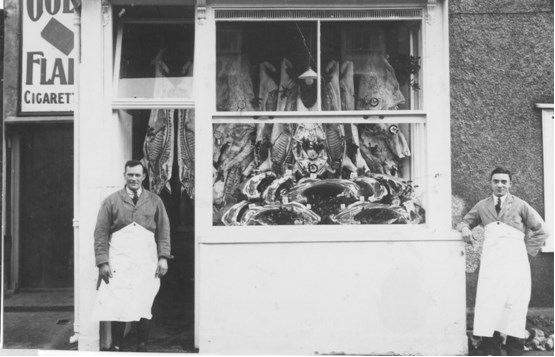
and Dennis Streeter
Ivy: Pigs were slaughtered at the premises. I used to hate that: Frank would say “we’re killing a pig today Ivy, you’d better go for a walk”. I used to make the sausages for the shop. They were horrible things to make. I couldn’t link them. He always had to link them.
Joan: My Tim was a shooter… used to go out and shoot rabbits for the pot. We used to get fed up with them, especially my kids did…
Ivy: People used to bring rabbits for Frank to skin… and pheasants… I’ve plucked hundreds of pheasants. There was a big shop in London that used to want 50 pheasants at a time and used to have to help pluck them
Joan: Well they were a luxury really… well not to us because we used to get them quite often
Ivy: Where the flats are now in Totts Lane, by the chapel, there used to be two old houses, two up, two down. Mrs Young lived there – she had four boys – and Mr Young used to keep pigs on the allotment. The allotment was where the land is next to the Yew Tree that stretches down to Totts Lane, he used to keep pigs at the bottom there. Bertie Parker who lived in Totts Lane used to keep pigs there too. During the war you were allowed to keep a pig… Bertie Parker was always called “popper” Parker, because he rode a motorbike that went “pop pop pop”. He kept chickens too. Lots of people had chickens. There were a lot around Totts Lane
Joan Carter and Ivy Reeds