Compiled by Robert Huntley and Peter Knight published in June/July 2005 issue of Walkern Journal
On the 10th July 2005 the Royal British Legion will celebrate the 60th Anniversary of the end of the Second World War with church services around the country. In Hertfordshire a special service will be held at St Alban’s Abbey where members of the Legion’s local branch will be present. Although a number of Walkern villagers gave their lives during the conflict and others have died since, there are still some local residents who played an active roll in the war. This is their story.
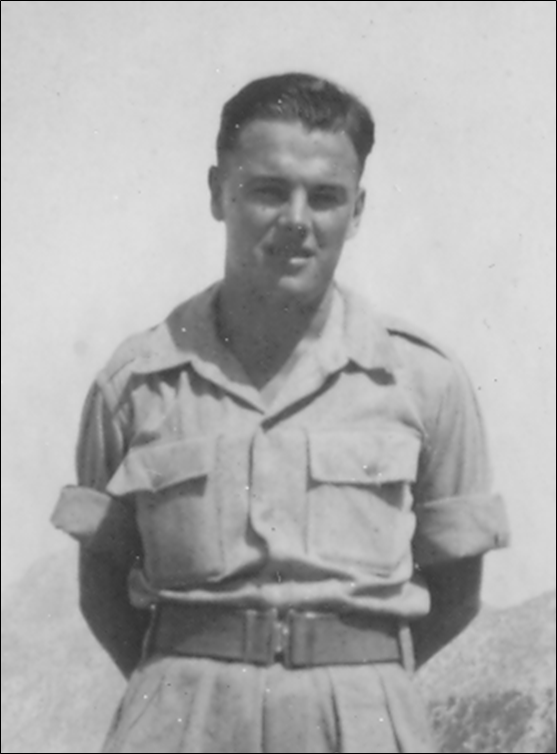
Ronald Hucklesby was only 17½ when he volunteered for the Army in 1944. After six months training in Scotland he was posted to the Royal Fusiliers at Shorncliffe, Kent and in January 1945 was sent to France where he took part in the advance through the Low Countries. In February 1945 he joined the 2nd Battalion Essex Regiment, part of the 149th Division, as a rifleman. He was involved in the final capture of the town of Arnhem and areas beyond including V1 and V2 rocket sites, which had wreaked so much damage on London in particular.
Ron always remembers the nervous and silent apprehension as he and his comrades prepared to move forward and then the exhilaration of liberating the people of Holland. “Crowds came out to cheer and greet us,” he said, “but it was very sad to see how badly nourished these people were.” A proud moment was when he took part in the Victory Parade before the Dutch Royal Family and the people of The Hague as the war in Europe was coming to a close.
After the war in Europe ended on the 8th May 1945, Ron was assigned to peace-keeping duties in Germany before returning to the UK for training in jungle warfare in Kent! Fortunately, the war against Japan ended on the 15th August, bringing to a close the Second World War.
There was still work to be done, however, and in October Ron was posted to the 1st Battalion, Duke of Cornwall’s Light Infantry, for service in Palestine under a League of Nations mandate. In 1947 the Battalion moved to Jordan and then to Larnaca in Cyprus before Ron was finally demobbed in 1948. Ron is a former Chairman and now Vice-Chairman of Walkern RBL and lives with his wife, Francis, in Greenways.
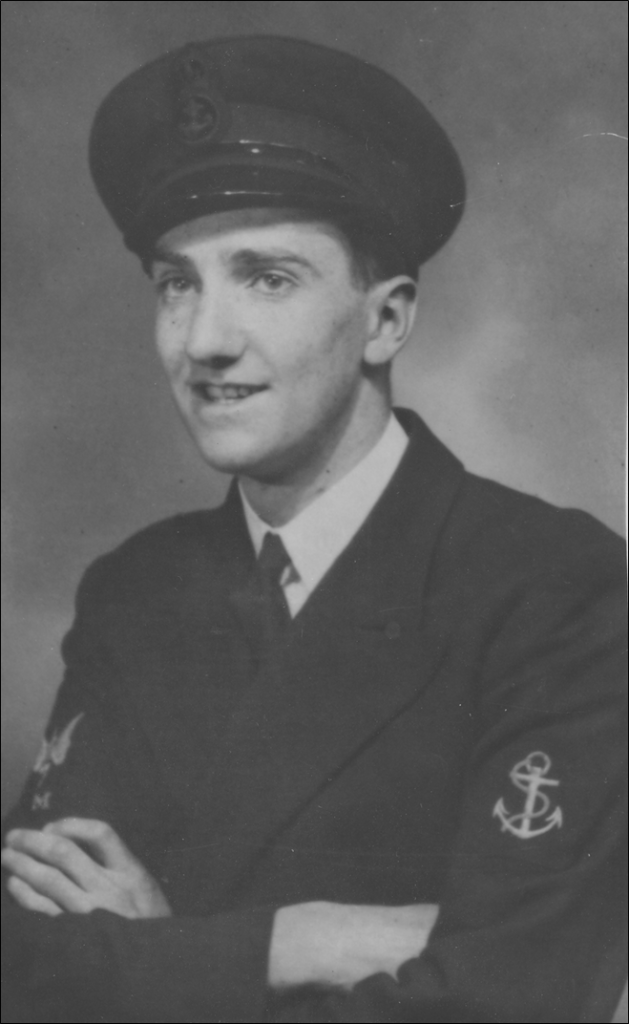
Peter Knight, who is Hon. Secretary of Walkern Branch and lives in the High Street with his wife, Edna, was too young to join up at the beginning of the war and had to wait until November 1944 before he was old enough to join the Royal Navy. However, Peter got an early taste of the war in 1941 when, during a heavy raid on London on the 16th April, his home in Bromley was badly damaged after a parachute mine exploded on houses in the next road killing 18 people. The roof of Peter’s house and all the doors and windows were wrecked. “As if that wasn’t enough, incendiary bombs started clattering down around us and the next morning a second unexploded parachute mine was found hanging from a tree 200 metres away. We were all taken away from the danger zone until a Royal Navy bomb disposal team made it safe,” Peter recalls.
During his early days in the Navy, Peter was posted to HMS Ganges at Shotley, near Harwich for initial training. This coincided with the Allies over-running the rocket launching sites in France and Holland, finally ending the deadly German attacks on London and the South of England. The war ended before Peter could play an active part in the conflict, but he saw plenty of action on the Home Front. Peter later served in HMS Liverpool and HMS Peacock in the Mediterranean.
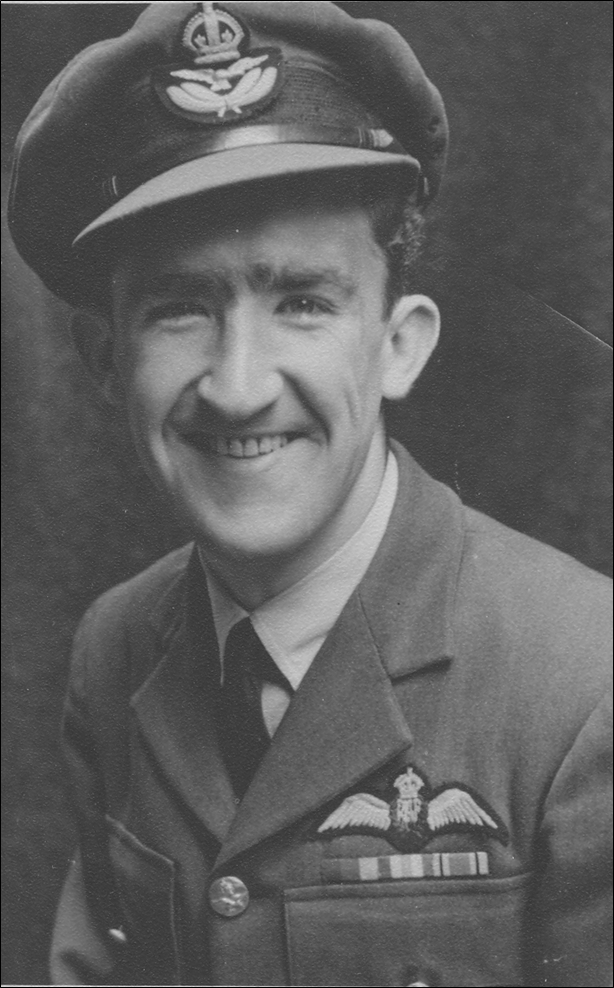
Angus Nicholas lives with his wife, Pat, at the Maltings, Walkern. He volunteered for the Royal Air Force in November 1941 and on call up, was sent to the aircrew reception centre at St. John’s Wood, London. Learning to fly in Britain was too dangerous, so Angus set sail for Durban in South Africa from where he was posted first to Bulawayo for initial training and then to the Elementary Flying School near Salisbury where he was taught to fly Tiger Moths. In October 1943 and after further training in twin-engined aircraft, he passed out as a Sergeant pilot.
A tortuous journey to the Middle East followed, finally joining an operational training unit near Tel Aviv where he learned to fly Wellington bombers. Two months later Angus was transferred to Lydda for a one-month conversion course to fly Liberators, closely followed by his first operational flight over German occupied Crete. He then joined 178 Squadron based at Foggia, near the east coast of Italy, and over the next six months flew no less than 29 sorties over enemy occupied territory, including dropping mines in the Danube by moonlight and carrying out raids on marshalling yards, oil refineries and air fields in Austria, Germany and Italy. Towards the end of the tour Angus was promoted to Pilot Officer and in October 1944 he flew to Egypt, where he celebrated his 21st birthday.
Transferring to the Communications Flight at Air Headquarters, Iraq, and based near Baghdad, Angus flew a variety of aircraft throughout the Middle East, before returning to Britain in January 1946 where he continued flying for the training of radio operators before his demobilisation in August. Angus is the Treasurer of Walkern RBL
Colin Peartree, joined the Territorial Army, attached to the Honourable Artillery Company, in February 1939 and at the outbreak of war was sent to an Officer Cadet training unit from where he was commissioned into the Durham Light Infantry as a 2nd Lieutenant.
In April 1940 Colin was sent to France for further training and to assist with the construction of airfields. Within a few weeks, however, the Germans launched their massive offensive into the Low Countries, rapidly sweeping into France. Poorly equipped to withstand such an onslaught, Colin’s detachment of some 40 men, including sappers and stretcher bearers, was immediately ordered to withdraw – but where to? Chaos reigned supreme, enemy gunfire could be heard in the distance but the party managed to commandeer two RAF lorries and head eastwards. Arriving at Meteren, the party was arrested by its own side on suspicion of being spies, but after being convinced otherwise, were set free. Ordered to make for Dunkirk, Colin commandeered a bus, but during the night the driver took off and the party was forced to make the journey on foot alongside refugees fleeing the Germans. Constantly under air attack from Stuka dive bombers, death and destruction was everywhere and progress was slow.
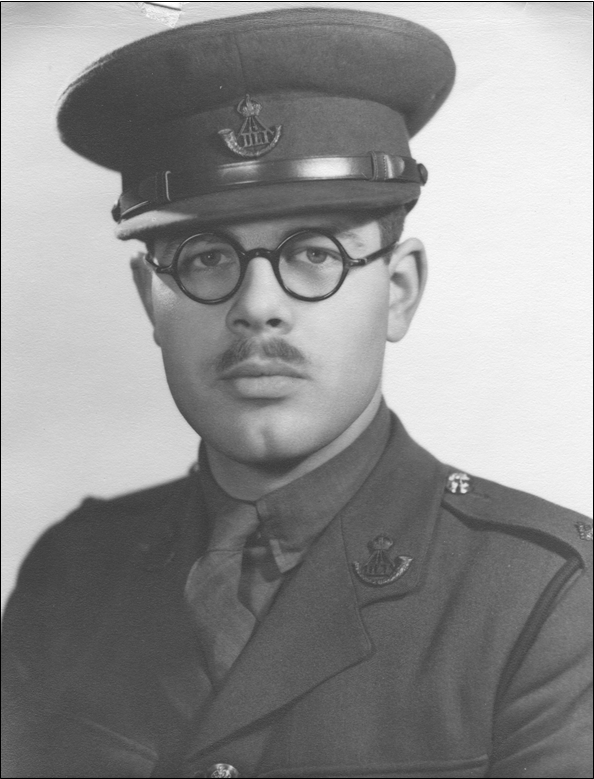
Finally arriving outside Dunkirk, the party was ordered to destroy all its equipment and make for the damaged jetty where they boarded a British minesweeper bound for England. It was the last ship to leave the jetty, thereafter troops had to queue on the beaches.
Many men were killed or captured during the Dunkirk evacuation and on return to England, the Battalion was reformed and brought up to strength. In September 1940, the Durham’s were sent to Iceland amid fears that the Germans might attempt landings and threaten all Atlantic convoys. However, the Americans took over this task following the outbreak of war against Japan.
From as early as January 1942, Colin and his Battalion started training for D-Day, first in Wales for mountain warfare and then in Scotland for amphibious landings. When D-Day finally arrived on the 6th June 1944, Colin landed on the Normandy beaches with the second wave of the invasion force, only to be wounded during fierce fighting in the Villers bocage country. He returned to England in a tank landing craft and after treatment in a Sheffield Hospital was sent to Harwood House for convalescence.
Colin was demobbed in July 1946 with the rank of Major and is currently President of Walkern RBL. He and his wife, Deirdre, live at Bassus Green.
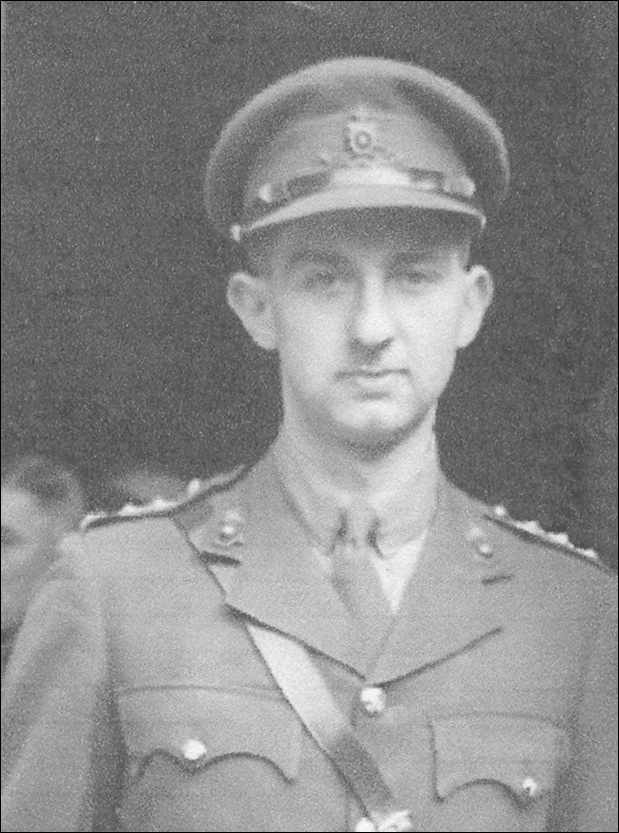
Roy Porritt, who lives with his wife, Mavis, opposite the Dovecote in the High Street, volunteered for Air Crew in 1941 but was rejected because of eyesight problems. Opting for the army instead, Roy undertook initial training in Bradford, his home town, before joining the School of Survey, Royal Artillery at Larkhill on Salisbury Plain. In 1943, after training as a surveyor/R.A., Roy was posted for officer training at Catterick Camp, Richmond, Yorkshire, passing out as a 2nd Lieutenant RA in December that year.
By 1944, after service in Downpatrick, Northern Ireland, Roy was back at Salisbury Plain taking part in major exercises for D-Day. But his participation in the invasion was cut short when he was involved in a motorcycle accident and found himself instead in the Royal Sussex Hospital, Brighton. It was while recuperating from his injuries that he met up with Mavis, a pretty nurse from King’s College Hospital, who he was later to marry.
After discharge from hospital, Roy was posted to prisoner-of-war camps at Wooler in Northumberland and Thirkleby in Thirsk, finally being discharged as Captain R.A. in 1947
Derek Richardson was Walkern’s Postmaster for 44 years and still lives above the village stores, which he ran for 32 years. Before the war Derek lived in Knebworth, but was a regular visitor to Walkern where he helped to run the Scout Troop.
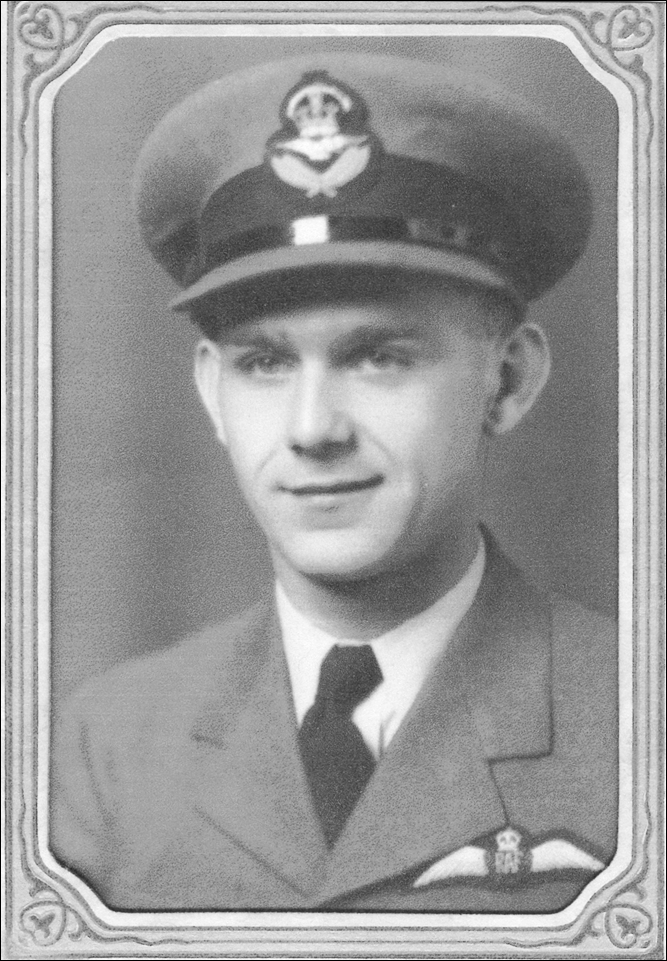
In 1941, Derek joined the Empire Air Training Scheme in which potential pilots from Britain and the Commonwealth countries were taught to fly. Within a year, he was posted to Canada where he completed a course at the Instructors Training School, Alberta. He was promoted to Flying Officer, later Acting Flight Lieutenant, with the job of training future fighter and bomber pilots. The training lasted six months and was arduous and a times dangerous. On two occasions the engines on his aircraft cut out and he and his student were forced to crash land, once after colliding with the top of a tree!
Derek continued training pilots until October 1945 and on demob returned to Walkern, where his brother, Donald, was then the village Postmaster. It was Donald who organised Walkern’s VE celebrations 60 years ago.