by Richard Cannon, first published in the Dec 2009 / Jan 2010 issue of the Walkern Journal.
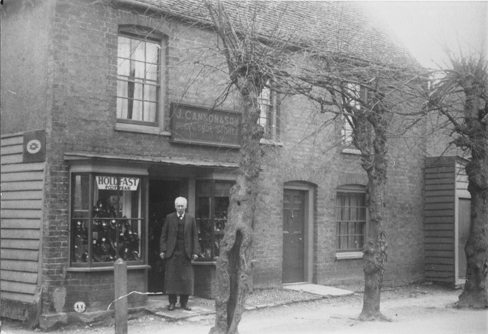
outside the shop at the top of Winters Lane
John Henry Cannon, my grandfather, was born 1866, the eldest of seven children of Philip and Sarah Cannon. His father, Philip, was a horse-collar and boot maker and is remembered on the choirstalls in Ardeley. John’s Uncles and Grandfather were Blacksmiths in Wood End and Ardeley.
Philip died in his early 50’s. Leaving John to provide for his widow and six other children. John had learnt his Father’s trade and duly taught his brother Charles, Philip’s second son, who subsequently set up his own business in Tottenham.
In 1893 he met and married in March 1894, Lily Dear. She was in service at Ardeley Bury, but a native of Abbots Ann in Hampshire. In 1894 they moved to Walkern and became tenants of the house in which my family now reside (at the corner of Winters Lane and the High Street).
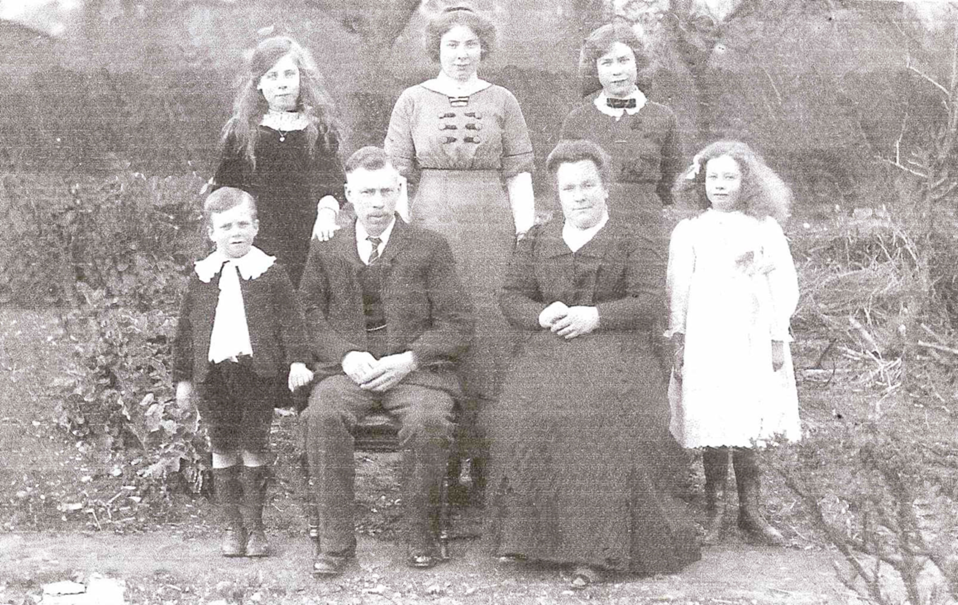
Philip, Doris, Nance, Beatrice and Jean 1914
John and his relatives, tenanted the whole of the area between Winters Lane, Cinder Lane (the end of Totts Lane) and the Yew Tree Public House, bounded on the west by the High Street. The area included the old Allotment Field (where the new development is) and Land Field, which extended down Winters Lane on its south side, where the bungalows are now erected. The other Cannons were dealers in eggs (egglers) and general dealers (higglers).
John Henry had five children between 1895-1907 – my Father was the youngest and only son. The second eldest daughter was Beatrice, who became the wife of Cecil Ritch, the last tenant of Finches Farm.
During 1898 the house and three adjacent cottages were put up for sale by the Landlord. John bid to his limit of £440, but the successful bid came from the Cotton Browne Estate at £450. The Cotton Browne family then owned most of the East side of Walkern High Street. However, at the time, the agent for Cotton Browne was instructed to sell the properties to John Cannon if and when he could afford £450. The subsequent purchase was made in 1920. The Cotton Browne’s granted this ‘favour’ as John was regarded by that family as a most highly respected man and tradesman.
On his death in 1944 the probate value was set at £450, that is – no increase in 46 years. All trades suffered adverse conditions between 1900 until the commencement of World War I (1914). John’s family had increased and no doubt times were difficult for all. He resorted to pig keeping and some farming to supplement his income.
Pigs, as weaners were purchased from the Cordells at Bridgefoot Farm, he bred and fattened pigs mainly on barley meal again from Mr Cordell. From his records, the fattened pigs were sold to Sawyers the Butchers whose premises were at 58 High Street (opposite the White Lion) before Sawyers moved to their Stevenage Road shop. Sawyers sold the better cuts, legs and loins, while the cheaper hand and belly cuts were returned for John’s family to consume.
John rented Land Field in 1909 for about 15 years. The first 5 year period was at a rent of £4 per year for the 3 acres, about 26/8d (£1.33) per acre, and wheat, barley and potatoes were grown.
In 1910, from his records, John Henry Cannon hand-made welted horse-hide boots, with tips and hobnails for 10/6d (approx 52p) per pair. Compare this with a Land Labourer’s weekly pay of about 12/- (60p) with usually a 55-58 hour working week.
Although hand-made boots were the nucleus of his trade until the 1920s, gradually these were replaced by stock from large manufacturers. In 1949 the last pair of hand-made boots were completed by my Father.
Electricity came to the village in 1932, and with the assistance of my father he up-dated the business. Modernisation included a large electrically powered ‘Finishing Machine’ – the arrival, of which aroused some interest in the Village. Leather Mangles and Welting Machines supplemented the treadle sewing and hand welting machines. The necessity of these was apparent as two other Boot Repairers had become established within the Village.
He had a great friendship with old Mr Howard-Carter of Ardeley Bury, who was in the leather trade in the Kingsland Road, London. Often ‘Bends’ of leather were transported in Mr Howard-Carter’s car boot to Walkern. Two ‘Bends’ from one hide, was often ‘holed’ with Warble Fly larvae in those days. The pungent smell of soaking leather wafted throughout our house when I was young.
A devout Congregationalist at the ‘Top Chapel’ John Cannon became an Elder at the Chapel until his death in 1944. A very industrious, religious and law-abiding man. My Father took over the business and properties for the next 30 years, it closing upon his death in 1973.
For interest, the three lime trees to the front of the property and old shop were removed in 1966 by ‘compulsory Purchase Order’; compensation was £80 plus sunblinds. Due mainly to the representations by the proprietors of Sworders Garage whose coaches were purportedly being ‘scratched’ by the trees. At around the same date, however, four lime trees were removed in Benington, opposite the Bell Public House and outside of Harold Pearman’s butchers shop. Surely the blame for their removal cannot be laid at Sworders door!
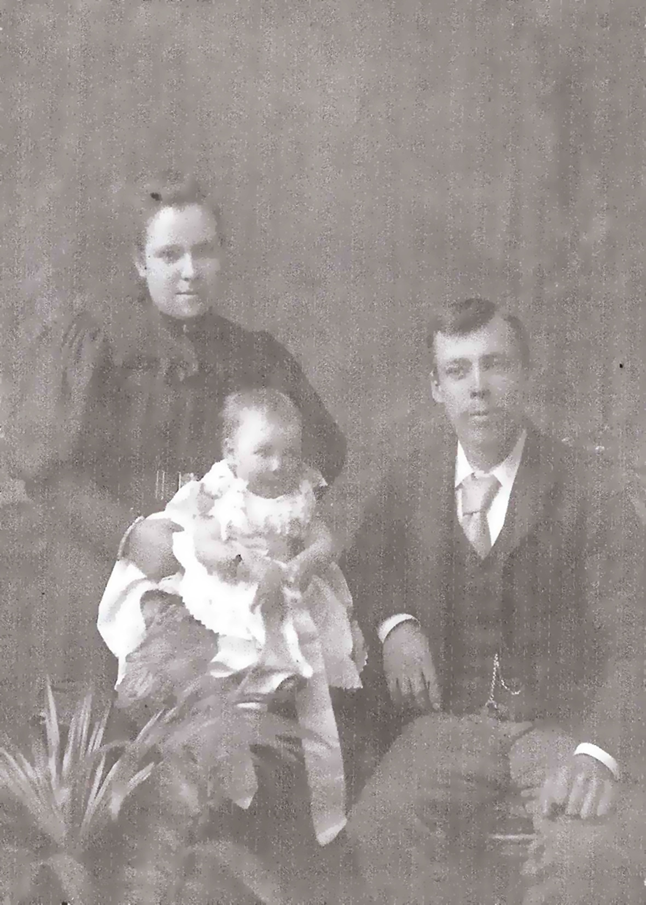
eldest child Nance, 1896
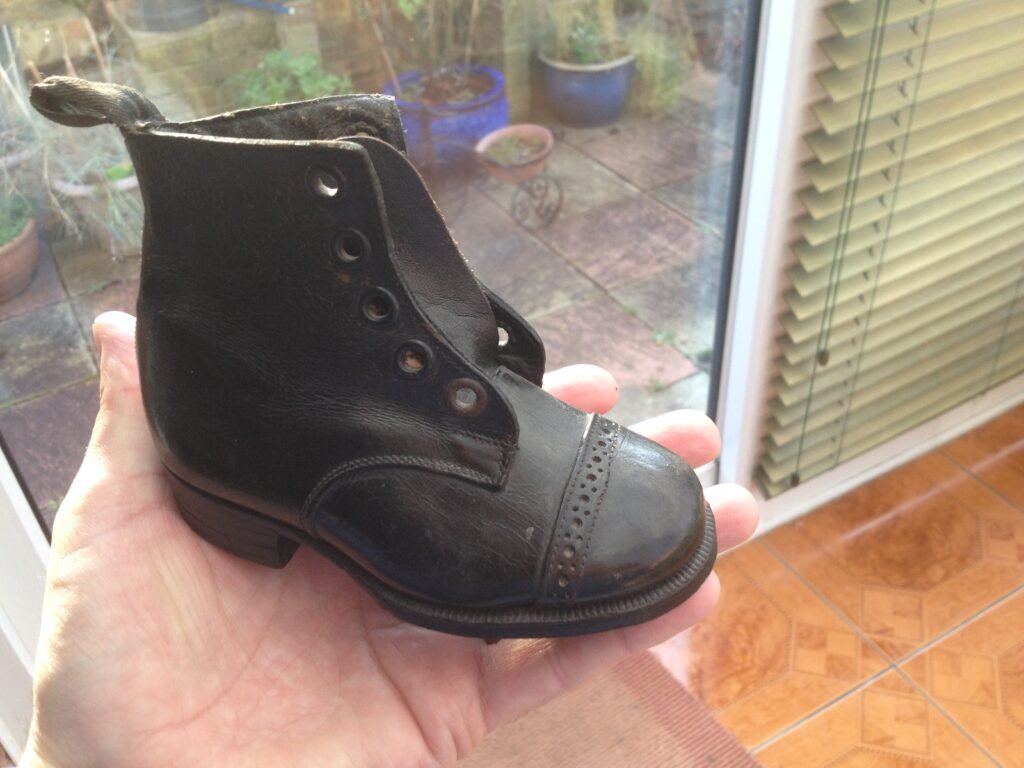
You might also be interested in The Art of Hand Making Boots
For more historical pictures of Cannons shoe shop click here