To purchase this book come and visit us in the Pigeon Hut (click here for opening times) or contact us
£10.00
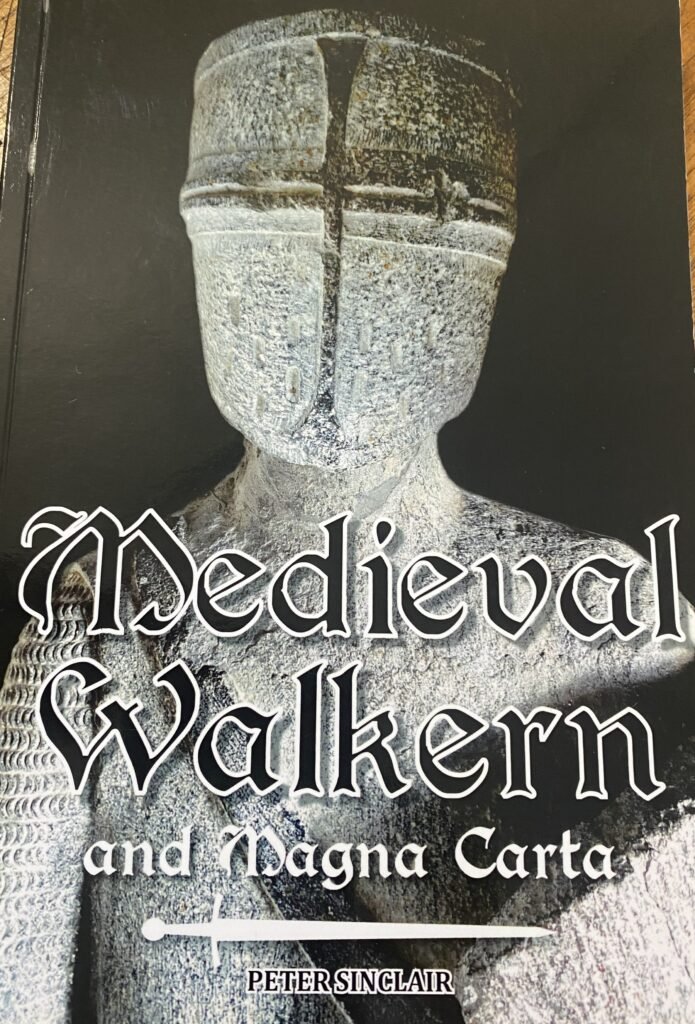
Medieval Walkern and Magna Carta
by Peter Sinclair
For anyone passing through Walkern it is just another pretty Hertfordshire village. Yet like so many villages in England, it has a history, and a very rich history too.
Soon after the Norman Conquest, Walchra, as it was known then, became the property of Eudo the dapifer, steward to three Norman kings. After his death in 1120, it was granted to Hamo de St Clair, constable of Colchester castle and later sheriff of Essex, and after the heroic death of his son it passed to William de Lanvalei, a Breton and supporter of Henry II.
When the barons of England took up arms against King John in November 1214, William’s grandson, another William, was amongst them. He was stripped of his property by the king and excommunicated by the Pope. In June 1215, at Runnymede, he was chosen as one of the 25 sureties or guarantors of Magna Carta. It is this William who is commemorated by the remarkable marble effigy still to be seen in Walkern’s parish church, almost 800 years later.
Walkern’s medieval lords of the manor were able administrators from lesser baronial families, and have largely remained invisible. It is only now that their story, and the early history of Walkern, is beginning to be told.
Peter Sinclair has been studying the origins of the Saint Clair family in England as part of his wider research into their appearance in Scotland in the twelth century, and in Ireland in the seventeenth century.
Front cover : Photograph courtesy of Rod Shone